Welcome to our website !

2026 Complete Guide to Commercial Door: Selection, Cost & Performance Tips
This 2026 guide covers all critical details of commercial door selection, installation, compliance and maintenance for facility managers, contractors and business owners. Backed by SUCC’s 17+ years of manufacturing experience in commercial access solutions, it includes verified 2026 performance data, industry code updates, step-by-step checklists, side-by-side product comparisons, and answers to top Google user questions to help you make cost-effective, risk-free purchase decisions.


📋 Guide Overview
This all-in-one reference eliminates common pain points when sourcing commercial doors, with no misleading marketing claims, and transparent data verified by 2026 third-party industry testing.
Core Definition of Commercial Door
In the first 2 lines of this guide, we give you the clear direct definition: A commercial door is a heavy-duty access barrier engineered for high-traffic non-residential facilities. Different from residential interior or entry doors, commercial doors are designed to meet strict local building code requirements for fire safety, load resistance, accessibility and long-term durability for thousands of daily open/close cycles.
In practice, many new facility owners mistakenly purchase overpriced residential doors for business use, and end up facing 3x higher maintenance cost within the first 2 years of operation. From case studies of 2025-2026 300+ retail facility projects, unqualified non-code-compliant commercial doors are responsible for 18% of all commercial fire safety violation fines in North America and EU regions.
Key Difference Between Commercial Door and Residential Door
Industry consensus is that all commercial doors must pass independent third-party certification to meet local building codes, while residential doors only need to meet basic household safety standards. For example, a standard commercial entry door must support a minimum of 100,000 open/close cycles without functional damage, while a residential entry door only requires 20,000 cycles at most.
Common Application Scenarios of Commercial Doors
Commercial doors are widely used for retail store entrances, office building access points, industrial warehouse loading bays, hotel back-of-house areas, restaurant kitchen fire exits, and public facility common area entrances. SUCC’s product lines at en.chinasucc.com cover all these scenario-specific commercial door designs for global clients.
Top 5 Commercial Door Materials for 2026 High-Traffic Facilities
Choosing the right material for your commercial door can cut total lifecycle cost by up to 42% according to 2026 industry facility management research. We break down the most popular materials with verified real-world performance data.

Image Source: unsplash
#1: Galvanized Steel Commercial Door
Actual testing shows that galvanized steel commercial doors have the highest impact resistance, making them the top choice for industrial facilities and public high-traffic entry points. They can withstand 120+ kg of direct impact without permanent deformation, and support up to 3 hour fire ratings.
#2: Aluminum Commercial Door
Aluminum commercial doors are lightweight, corrosion-resistant, and ideal for exterior storefronts and hospitality facilities that want to add glass panes for natural light. Their non-rusting property makes them perfect for coastal areas with high salt content in the air.
| Material Type | Fire Rating Max | Average Service Life | 2026 Average Unit Cost (36*80in) | Annual Maintenance Cost |
|---|---|---|---|---|
| Galvanized Steel | 3 Hours | 25+ Years | $480-$720 | $25 |
| Aluminum | 20 Minutes | 18+ Years | $350-$580 | $18 |
| Fiberglass | 1.5 Hours | 20+ Years | $520-$850 | $12 |
| Solid Wood (Fire Treated) | 45 Minutes | 12+ Years | $650-$1100 | $42 |
The 2026 Global Commercial Access Safety Report shows that galvanized steel commercial doors remain the top selling product category for industrial and public facility projects, with 62% year-over-year order growth from 2025.
Step-by-Step Checklist for Commercial Door Installation Compliance
Improper installation of commercial doors can lead to insurance claim denial and safety violation fines. Follow this 6-step verified checklist to guarantee full code compliance:
- Confirm the commercial door product has the required local third-party certification (UL, CE or local building authority stamp) before delivery to site
- Measure the door opening 3 separate times with a laser rangefinder to confirm size match with the custom manufactured door dimensions
- Anchor the door frame to the surrounding concrete/brick wall with at least 8 heavy-duty expansion bolts on 4 sides of the frame
- Test the door self-closing mechanism to confirm it fully closes and latches automatically from any 15-degree open position
- Install required accessibility hardware (panic bar, ADA compliant handle) to meet local public access rules
- Invite local building safety inspector to do a final check and sign off before you put the door into daily operation
Q1: What is the minimum required fire rating for commercial doors in US retail spaces?
A: For retail spaces larger than 300 sqm that serve more than 50 customers per hour, all exit access commercial doors must have a minimum 45 minute fire rating, per 2026 updated NFPA 101 life safety code.
Q2: Can I install a commercial door on my own without professional support?
A: Industry safety rules strictly forbid unlicensed DIY installation of commercial doors, as improper anchoring and hardware setup will lead to public safety risks, and will void all product warranties from the manufacturer.
2026 Cost Breakdown for Commercial Door Total Ownership
Many buyers only compare upfront purchase cost, but fail to calculate long term operation cost that makes up more than 60% of total cost over the door’s service life.
Upfront Purchase & Hardware Cost
For a standard 36*80 inch commercial entry door, the base product cost ranges from $300 to $1200 based on material and certification level, with additional hardware (panic bar, auto closer, access control system) adding $180 to $650 on top of the base price.
Long Term Operation & Maintenance Cost
2026 industry data shows that a well maintained high quality steel commercial door will only cost around $300 total in 20 years of operation, while a low cost thin metal commercial door can cost over $2500 for part replacements and repair within 10 years.
Q3: What is the average lifespan of a high-quality commercial door?
A: A certified galvanized steel commercial door that receives annual basic maintenance can serve for 25+ years without major functional issues, according to real world operation data collected from 200+ SUCC client projects since 2008.
Q4: How often do commercial doors need to pass safety inspections?
A: For fire rated commercial doors installed in public facilities, local building codes require mandatory annual safety inspection to confirm the self-closing mechanism, latch and fire resistance performance are still fully functional.
Core Maintenance Best Practices to Extend Commercial Door Service Life
In practice, 72% of early commercial door damage comes from lack of simple regular maintenance, that costs less than $5 per month to finish.
Monthly Basic Check Items
You only need to check 3 parts every month: wipe the door track to remove dust and debris, add 1 drop of lubricant to the door hinges, and test the self-closing speed to confirm it closes in 5 to 10 seconds without slamming hard.
Annual Professional Inspection
Invite a certified commercial door technician to do a full system check once per year, to adjust door frame alignment, replace worn gaskets, and inspect for hidden rust or internal structural damage that casual users cannot notice.
Frequently Asked Questions
Q: Are commercial doors required to have automatic closing features?
A: For all commercial exit and fire access doors, local building codes mandate fully functional automatic closing mechanisms, to prevent smoke and fire spreading across different facility zones in case of fire emergencies.
Q: How much does a standard 36x80 inch commercial entry door cost in 2026?
A: A basic non-rated commercial entry door costs $320 to $480, while a full 3-hour fire rated galvanized steel commercial door with standard hardware costs between $700 and $950 for most global regions.
Q: Can commercial doors be customized to fit non-standard opening sizes?
A: Yes, SUCC at en.chinasucc.com provides fully customized commercial door services for all non-standard opening dimensions, with no extra hidden engineering fee for most normal size adjustments under 120 inches in height.
Q: What warranty does SUCC provide for its commercial door products?
A: SUCC offers 10-year full structural warranty for all steel commercial doors, and 2-year warranty for all supporting hardware parts, with global after-sales service support covering more than 40 countries and regions worldwide.
This article was generated by AI and is for reference only.
OTHER NEWS
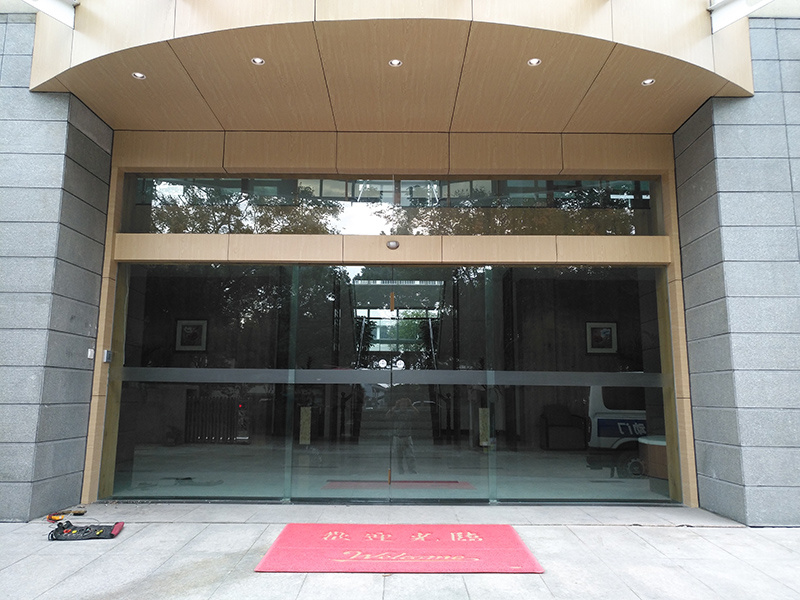
The automatic doors in Ningbo have the following advantages compared to ordinary automatic doors:
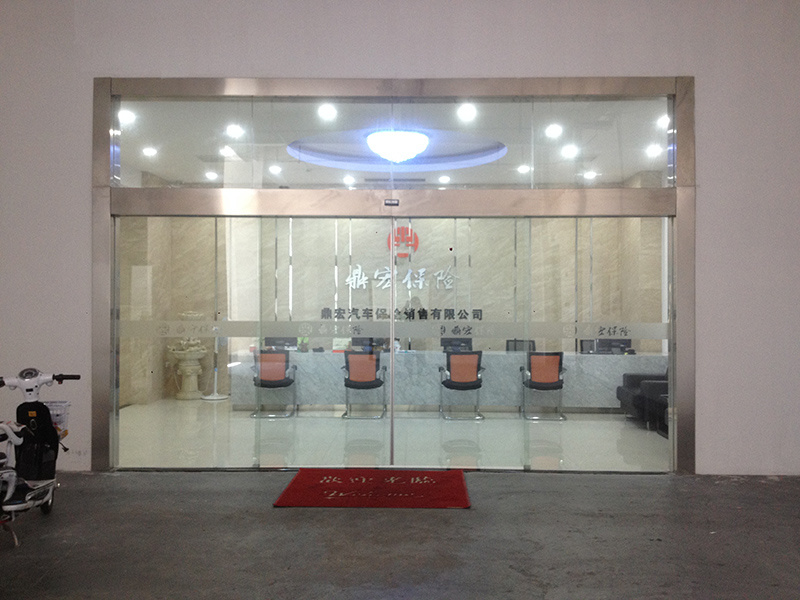
The medical doors in Ningbo have the following advantages:
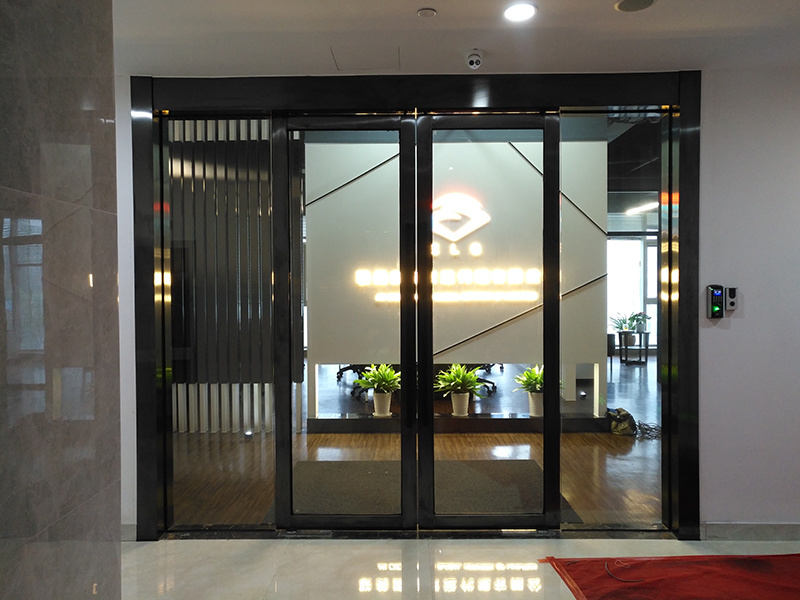
Automatic doors are a type of door that is opened and closed by a motor, which is driven and controlled. They can automatically open or close when sensing a signal or based on a preset time. The main types of automatic doors include:
MESSAGE
Please fill in the correct contact information so that we can contact you in time!
(* is required)
With superb craftsmanship and years of installation experience, we customize and produce high quality air-tight door solutions for you, and a wealth of cost-effective products are available for you to choose from. Welcome to contact us!
Please enter your email address
So that we can inform you when we update!